
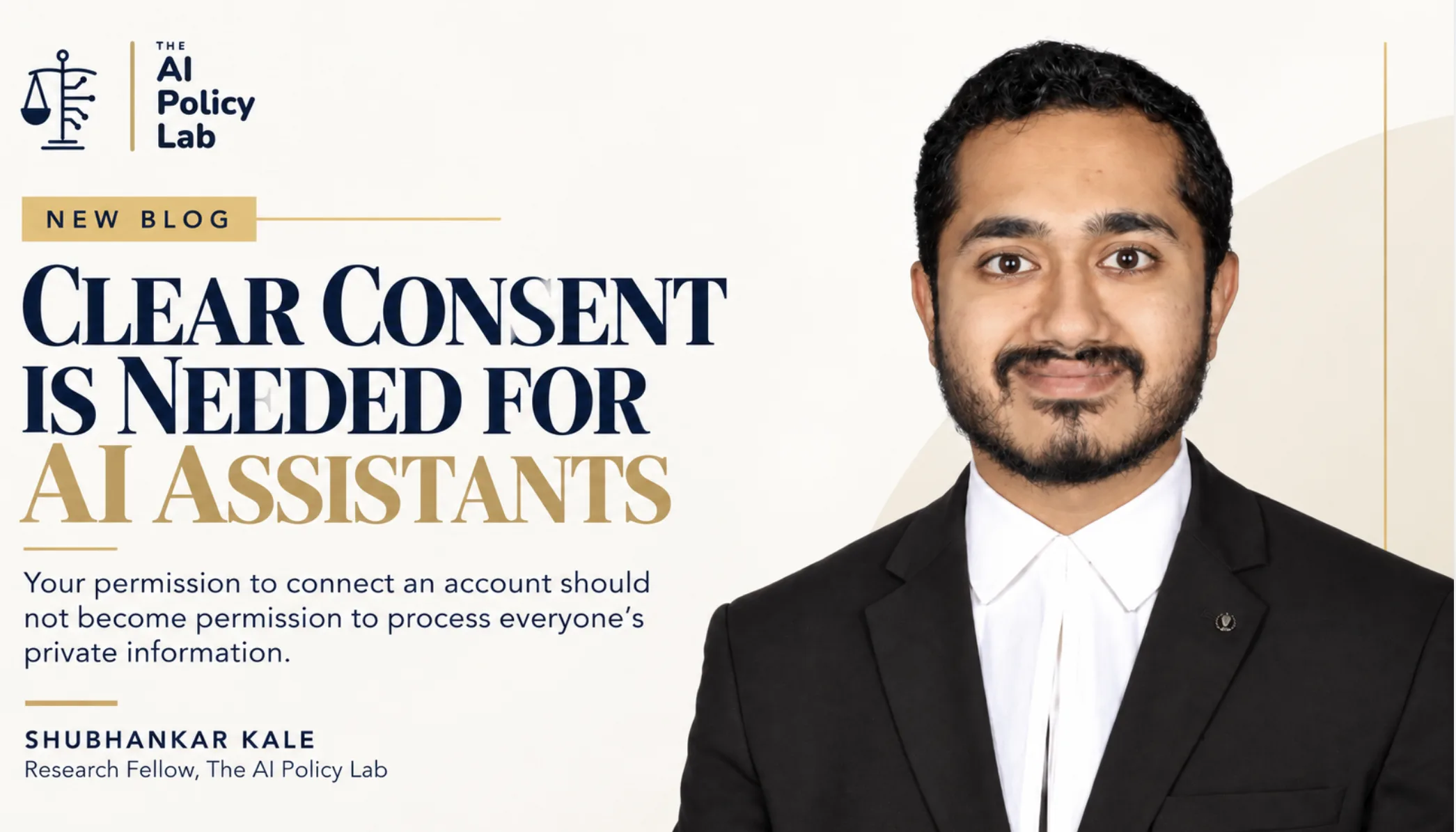
Imagine you ask an AI assistant to find your flight booking in your Gmail inbox. While doing so, it also reads sensitive information, such as a friend’s financial difficulties, that was never meant to be shared. You only wanted your flight tickets, and you trusted the assistant with your inbox. This hypothetical example shows why the question belongs at the centre of India’s AI privacy debate: how far should your permission to connect an account extend when the content the assistant sees and processes includes someone else’s personal information? The answer should not be “wherever the AI takes us”.
An inbox records messages between people. People write to a person, not to an inbox provider. Accessing an account, answering a query, keeping a memory and training an AI model are entirely different things, and a single permission notice should not obscure those differences.
India’s Digital Personal Data Protection Act, 2023 draws this distinction. Section 2(j) defines the “Data Principal” as the person to whom personal data relates, not the owner of the device or account that holds it. Sections 4 and 6 require consent for a specified purpose and do not permit wide access for every use. For example, a friend who has sent their medical information to seek advice has not necessarily given permission for an AI platform to analyse it.
This is also where responsibility lands, and it matters whom it lands on. Section 3(c)(i) of the Act excludes personal data processed by an individual for a personal or domestic purpose. You reading your own inbox to find your flight booking likely falls within that exemption. But once an AI assistant does the task, it reads every message in the inbox and may store the data or train on it. It does not do this for a personal purpose. It is a company offering a commercial service, which the personal and domestic exemption was never written to cover. The obligation does not fall into a grey area between you and your friend. It sits with the AI company, which is processing someone else’s personal data commercially and needs a lawful basis to do so.
The Ministry of Electronics and Information Technology notified the Digital Personal Data Protection Rules, 2025 on 13 November 2025. The Act’s commencement notification brought its institutional provisions into force immediately, while the core duties on notice, security and individual rights commence later. As of October 2026, the principal obligations on data fiduciaries are not yet in force. This creates a window to clarify the limits of consent.
The US Federal Trade Commission’s January 2021 announcement concerning Everalbum is a useful example. The regulator alleged that the photo storage provider used facial images from users’ photographs to develop facial recognition technology for its customers. The settlement finalised in May 2021 required express consent before such uses and the deletion of models built from users’ photos and videos. This was a regulatory settlement about consent, not a judicial ruling on AI email assistants. The lesson is simple. Permission to use someone’s data for one service is not permission to use it for everything else, which is why the regulator required the company to delete both the data and the AI models built from it.
India should address this problem rather than hiding it in long permission notices. Letting an AI assistant access your account should not remove the provider’s responsibility to protect other people’s information.
India’s emerging AI governance framework points in this direction. The India AI Governance Guidelines, unveiled by MeitY on 5 November 2025, adopt principles of trust, accountability and understandable design. In April 2026, MeitY formed the AI Governance and Economic Group as an inter-ministerial body to coordinate AI policy. This is policy guidance, not binding legislation. It still signals that the government expects AI systems to build in privacy safeguards from the start, not add them later.
The DPDP Act’s phased commencement gives India an opportunity. Before the core obligations take full effect, regulators should confirm that an account holder’s consent does not extend to processing other people’s information for unrelated purposes. The Act’s commencement notification schedules the principal duties for eighteen months after Gazette publication, so now is the time to act. Your assistant should help you manage your life. It should not assume authority over the private lives entrusted to you.
Discussion (0)
No comments yet. Be the first to start the discussion.